AcuSky Logo
Hero Background

Clean Architecture Explained: Why Every Airport Needs It

The Ultimate Guide to Clean Architecture for Airports (Without the Tech Headache)

Clean architecture is the standard for mission - critical software - from aviation systems to banking and defense. Its modular design, separation of concerns, and testability solve the fundamental fragility of monolithic airport systems. For airports, clean architecture isn't a luxury - it's a necessity for operational continuity and future - proof growth.

LinkedInXYoutube

Introduction: Modern Airports Need Modern Foundations

Let's be honest: airport software is complicated.

Gates, tenants, utilities, FAA data, invoices, documents, compliance…
Your average airport has more systems than a suburban mall during the holidays.
The problem?
Most of these systems were built back when:
• The internet sounded like dial-up.
• Encryption was optional.
• “The Cloud” was just water vapor.
• Software updates came on CDs.
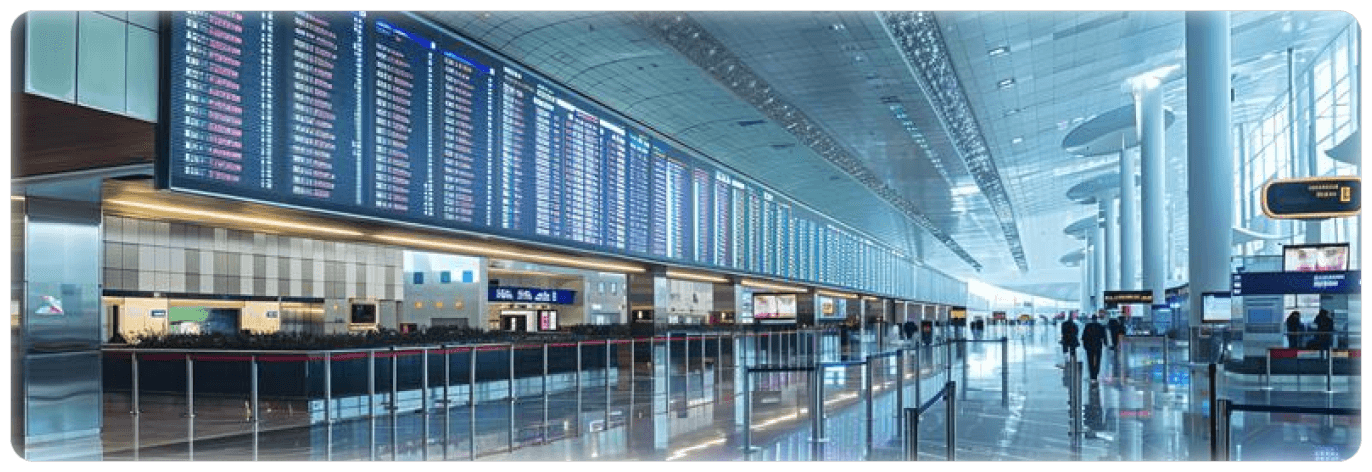
Airport
But modern airport operations generate real-time data, depend on automation, and require strong security.
This is exactly why airports are moving to clean architecture - the modern software foundation used by aviation, finance, defense, and other mission-critical industries.
Let's break down what clean architecture is, why airports desperately need it, and how it changes operations, finance, and security forever…
minus the buzzwords or headache.

What Is Clean Architecture (Airport Edition)?

arrow

Why Clean Architecture Matters for Airports

arrow

How Clean Architecture Improves Revenue Accuracy

arrow

Why Clean Architecture Strengthens Compliance

arrow

Security: The One Compromise Airports Can’t Afford

arrow

Integrations That Match How Airports Actually Operate

arrow

How Clean Architecture Reduces the Burden on IT

arrow

How Clean Architecture Helps Lower Total Cost of Ownership (TCO)

arrow

Why Airports Should Modernize Now

arrow

Final Thoughts: Clean Architecture is the Future of Airport Operations

arrow

1.What Is Clean Architecture (Airport Edition)?

To put it into simple terms, think of clean architecture as a well-designed airport terminal.

Everything has a clearly defined place:

  • The signage is easy to follow.
  • Zones are logically partitioned.
  • The flow is efficient and smooth.
  • Gates, terminals, security, and retail each operate independently.
  • The terminal is secure and expands easily to accommodate traffic.

Now imagine the exact opposite of this.

Security, baggage, terminals, retail systems, utilities, and reporting all crammed into a single massive room, tightly tangled together. Trying to move anything at one corner breaks something else across the room.

This is a monolithic system, aka spaghetti code.

Clean architecture flips the script entirely. Instead of shoving everything into one system where it all gets messy, it's built with intention and structure:

  • Every piece of the system has its own job and works on its own.
  • The lines between components are crystal clear, there's no overlap, no confusion.
  • How systems talk to each other is predictable and tightly managed.
  • Security and access controls? Non-negotiable.
  • Integration happens through modern, secure channels.
If you're not technical:

Clean architecture means each part stays in its lane, does its job, and still plays nice with everything else.

If you write code:

Think clear separation of concerns, dependency inversion, well-structured layers, components you can actually test, and integration points that don't make you want to tear your hair out when you need to scale or maintain things down the road.

If you run an airport:

Updates don't crash the system. Data stays reliable. Your teams move faster. Revenue doesn't take a hit.

2.Why Clean Architecture Matters for Airports

Airports are ridiculously complex. You've got passenger flow, tenant management, utilities, airlines, regulatory requirements, and public safety-all happening at once, all the time.

The old monolithic systems? They weren't designed for any of this.

Clean architecture fixes the problems monolithic systems create:

A. Independence = No More System-Wide Breakage

In clean architecture:

  • Gate management is its own module.
  • Billing is its own module.
  • Utilities is its own module.
  • Tenant management is its own module.

Updating one area doesn't break the rest.

This single change allows airports avoid:

  • Unexpected system downtime.
  • Last minute crisis calls.
  • Emergency fixes and rushed patches.
  • Escalating vendor support fees.
  • Missed revenue opportunities.
  • Frustrated teams (we see you, Finance...).

B. Real-Time Airport Data (Yes, It Really is a Game Changer)

Airports equipped with clean architecture stop playing catch-up with airport operations and start moving at the same pace.

What does that actually look like?

  • Gate assignments update the second they change.
  • Airline movements get captured as they happen.
  • Utility usage shows up almost instantly.
  • Revenue calculations adjust themselves on the fly.
  • COIs and compliance documents sync automatically-no manual uploads.
  • Your operational dashboards actually reflect what's happening on the ground right now.

This means teams stop waiting in another era for overnight batch jobs and outdated reports.

C. Fast, Safe Updates

When systems are built cleanly in modular layers, developers don't have to walk on thin ice.

Teams can:

  • Get improvements out the door the moment they're finished.
  • Squash bugs without accidentally creating five more.
  • Deploy updates in a matter of days, not months of back-and-forth.
  • Tweak individual pieces without the fear of everything else falling apart.

For airports, this makes a world of difference:

  • Innovation happens at speed, but operations keep running smoothly.
  • When regulations change or new needs pop up, workflows can pivot quickly.
  • Compliance updates get done fast, and they're done right.
  • Integrating with airlines, the FAA, utilities, and other systems is actually straightforward.

3.How Clean Architecture Improves Revenue Accuracy

Let's be honest: if airport revenue systems were people, they'd need therapy.

MAG, CPI, percentage rent, utilities - all handled by logic built 15+ years ago.

Clean architecture rebuilds this foundation from the ground up.

A. Getting MAG/CPI/Percentage Rent Right

Instead of relying on:

  • Hard-coded formulas that are difficult to change.
  • Aging spreadsheets and manual calculations.
  • One-off overrides no one remembers setting.
  • Workarounds that are no longer necessary.

Clean architecture enables:

  • Automated escalations that are configurable.
  • Consistent use and application of CPI sources.
  • Real-time calculations instead of later adjustments.
  • A clear audit log for every system change.
  • Revenue rules that adapt to lease terms.

B. Utility Billing That... Actually Bills Correctly

Mapping meters to tenants shouldn’t require detective work.

With clean architecture, airports get:

  • Accurate meter to space and meter to tenant mapping.
  • Ability to track utility usage in real time.
  • Automatic allocation of shared resources without having to juggle spreadsheets.
  • Built-in checks to catch errors before they turn into billing nightmares.

This means you don't have to hear- “Oops, we forgot to bill that hangar for 7 months,” anymore.

4.Why Clean Architecture Strengthens Compliance

A. Audit Trails That Actually Make Sense

Clean architecture doesn't just store data; it records what happened, when it happened, and who exactly made the change.

That includes:
  • Lease updates and amendments.
  • Billing changes and adjustments.
  • COI renewals and expirations.
  • Document uploads and replacements.
  • Access and permission changes.
  • Gate activity records.
  • Utility usage corrections.

With these clean logs, your auditors will think they died and passed on to audit heaven.

B. GASB-87 Ready (Out of the Box)

Monolithic systems weren't built with modern compliance standards in mind. Clean architecture was. It handles:

  • Keeps lease classification and tracking uniform everywhere.
  • Runs amortization schedules automatically and keeps them accurate as time goes on.
  • Tracks evidence and documents with links you can actually follow.
  • Gives you standardized reporting templates that work right out of the box.
  • Makes sure your data looks the same whether finance pulls it or operations does.

The result? No more late-night scrambling to pull together lease documentation before audits.

C. COI and Document Automation

Keeping up with compliance documents should not involve playing memory games or digging up forgotten emails, but unfortunately, that's how most airports operate.

Airports commonly struggle to track:

  • COIs that are about to expire.
  • Required compliance documents.
  • Tenant policy renewals.
  • Airline insurance updates.

Clean architecture brings back order with:

  • Automated reminders.
  • Strong document-to-lease linking.
  • Tenant policy renewals.
  • Centralized compliance dashboards.

You don't have to go inbox diving like a raccoon anymore.

5.Security: The One Compromise Airports Can’t Afford

Airports, being critical infrastructure, make for high-value targets.

Many legacy systems still lack:

  • Modern encryption standards.
  • Multi-factor authentication.
  • Single sign-ons.
  • Segmented access controls.
  • Real-time logging and monitoring.

Clean architecture delivers:

  • SSO and MFA (finally!).
  • Granular, role-based access management.
  • Encryption at rest and in transit.
  • Full event and access logging.
  • Secure, regular patching.

Your IT team will finally get their well-deserved sleep without having to worry about midnight fixes.

6.Integrations That Match How Airports Actually Operate

Modern airports are dependent on data from:

  • Airlines
  • FAA Systems
  • AODB Platforms
  • Weather services
  • Concessionaire POS systems
  • Metering hardware
  • Security platforms

Clean architecture is API-first, it enables:

  • Real-time gate movement updates.
  • Automated billing triggers.
  • Immediate revenue generation.
  • Direct meter data ingestion.
  • Continuous FAA compliance feeds.

No more racing before the business closes for manual imports or CSV uploads.

7.How Clean Architecture Reduces the Burden on IT

Monolithic systems generate:

  • Frequent vendor calls just to keep things working normally.
  • Emergency patches to fix unexpected issues.
  • Manual restarts and fragile workarounds.
  • Custom scripts that only one person understands.
  • Version conflicts that slow down everything.

Clean architecture simplifies all of this. With this architectural overhaul, IT teams see:

  • Fewer support tickets.
  • Updates that are predictable and low-risk.
  • Cloud-based infrastructure that is easy to manage.
  • Modular, independent services.
  • More flexibility instead of vendor lock-in.
  • Easier and faster onboarding for new staff.
  • Troubleshooting that doesn't rely on guesswork.

This finally gives your IT team some breathing room.

8.How Clean Architecture Helps Lower Total Cost of Ownership (TCO)

Many airports don't realize how much of a money drain legacy systems are, due to their:

  • Increasing support needs and maintenance costs.
  • Slow implementation and delayed development cycles.
  • Unnecessary manual processes.
  • Increased security risks.
  • Integration failures.
  • Costly audit findings.
  • Missed billable events.
  • Ongoing revenue leakage.

Clean architecture reverses all of this by delivering:

  • Lower ongoing maintenance cost.
  • Faster updates and enhancements.
  • Reduced technical debt.
  • More automation.
  • Increased system uptime.

Plus, you stop paying 6+ vendors for overlapping tools.

9.Why Airports Should Modernize Now

Airport demands are increasing:

  • Passenger volume
  • Airline schedules
  • Utility usage
  • Tenant diversity
  • Compliance requirements
  • Staff turnover
  • Financial scrutiny

Legacy systems fall further behind each year.

Clean architecture doesn't just catch you up - it puts your airport ahead of the curve.

10.Final Thoughts: Clean Architecture is the Future of Airport Operations

Airports aren't standing still, and the system that runs them can't afford to either.

Modern airports can't afford to get locked in by restrictive technology. They need a technology foundation that is:

  • Scalable
  • Secure
  • Modular
  • Accurate
  • Real-time
  • API-first
  • Audit-ready
  • Future-proof

Clean architecture is that foundation that perfectly fits the bill.

All this is leagues out of reach for monolithic systems.

With platforms like AcuSky, airports finally have access to modern technology built specifically for their operational and financial needs.

Ready to Modernize Your Airport's Technology?

© 2026 All Rights Reserved