

The next decade of airport modernization will be driven by clean architecture and AI-driven automation. Airports that upgrade their foundation now will be positioned to leverage machine learning for forecasting, predictive maintenance, tenant analytics, and operational optimization.


Airports have always been early adopters of advanced physical technology-jet bridges, radar, baggage systems, runway sensors, and more. But their software has lagged behind.
The next decade is about to change that.
Modernization is accelerating. Clean architecture is becoming the new standard. AI is emerging as a powerful force. And airports that upgrade their systems now will benefit for years to come.
This blog explores:
Grab your boarding pass - the future of airport technology is ready for takeoff.


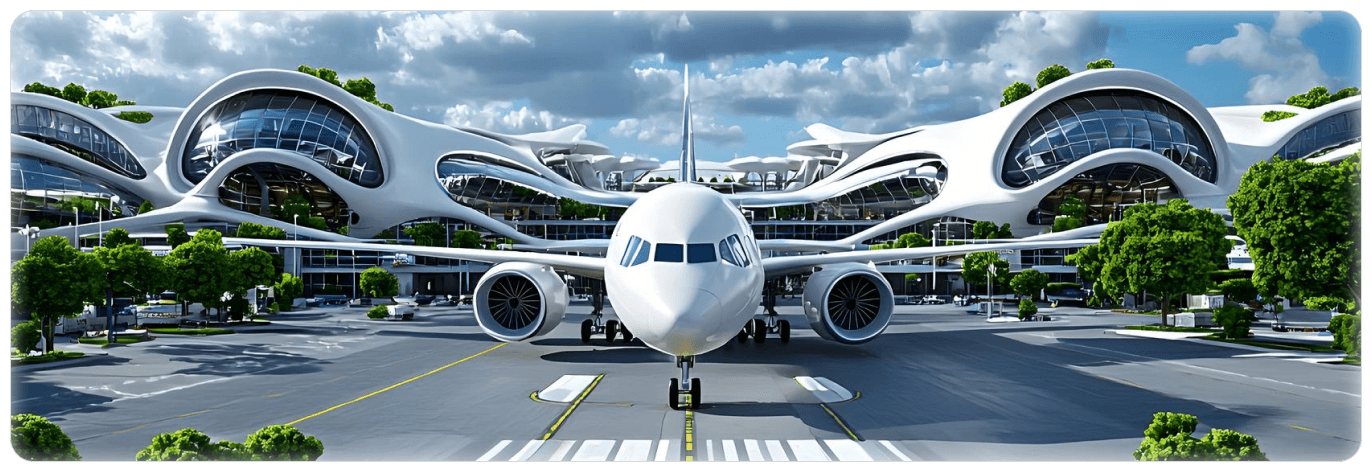
The next generation of airports will look very different from today.
What airports are already seeing:
But these innovations require a modern foundation.
Legacy software - built before cloud computing, AI, or modern APIs - cannot support these capabilities.
This is why the shift toward clean-architecture airport operating systems is accelerating.
Before airports embrace AI, automation, predictive analytics, or advanced integrations, they need a stable, scalable platform.
Clean architecture provides the backbone.
Here's why it matters.
A. Modular Systems Enable Innovation
Clean architecture separates critical airport functions into independent modules:
Each module can be upgraded, scaled, and optimized without breaking anything else.
This means you can:
…without rewriting your entire system.
Legacy systems?
They break when you try to modernize.
B. Clean Data Makes AI Possible
AI is only as good as the data feeding it.
Airports using 8 to 17 disconnected systems have:
AI cannot learn from bad data.
Clean architecture solves this by creating:
Clean architecture unlocks AI.
C. Real-Time Integrations Are Essential for AI
AI performs at its best with immediate access to:
Legacy systems are limited to:
For AI to work, data needs to flow continuously.
That is what clean architecture enables: a clean data flow.
D. Security Must Be Modernized Before AI Can Be Trusted
AI brings capabilities like:
Securing all this means you need:
Legacy systems weren't built with these kinds of security requirements in mind.
Clean architecture addresses them from the ground up.
AI will transform airports across five major categories.
You're not seeing this in 2040.
You're seeing this in the next 3-5 years.
Transformation #1: AI-Driven Revenue Intelligence
AI will enable airports to:
Picture AI alerting you:
"Gate G12 appears to be undercharged based on the activity this quarter."
This is the direction where the industry is headed.
Transformation #2: Predictive Operations & Gate Planning
AI digs into historical operational data and uncovers patterns to help airports:
Right now, gate planning is mostly reactive, meaning you deal with problems as you encounter them. AI is here to flip that script and make it proactive.
Transformation #3: Smart Utilities & Environmental Efficiency
When you combine AI with modern infrastructure, you get:
Imagine getting an alert like this:
"Hey, Terminal 2's power draw looks unusual for a Tuesday afternoon."
That kind of heads-up can save real money.
Transformation #4: Automated Compliance & Document Intelligence
AI can handle the repetitive and tiring stuff, like:
With this, instead of playing catch-up on compliance, airports can actually stay ahead of it.
Transformation #5: Airport-Wide Predictive Analytics
At a higher level, AI helps leadership stay prepared by giving them a view of what's coming:
With this kind of insight, leaders stop reacting to situations and start planning ahead for the future.
The rise of AI is going to expose just how limited outdated airport systems really are.
Why legacy architecture can't keep up:
It's like trying to run autonomous vehicles on unpaved roads.
The foundation simply isn't ready.
Airports that keep legacy systems will be left behind.
This is the most important takeaway:
You cannot layer AI on top of a broken foundation.
To enable the benefits of AI and automation, airports need:
And most importantly:
An operating system designed for the future - not the past.
That's clean architecture.
Airports that modernize with clean architecture don't have to wait long to see results. Here's how the journey typically unfolds:
Step 1 - Pull everything into one place
Revenue, gates, utilities, tenants, operations, compliance, documents-all living under one roof instead of scattered across disconnected systems.
Step 2 - Get data flowing in real time
No more waiting on batch jobs or overnight syncs. Information moves when it happens.
Step 3 - Build solid audit trails
This isn't just about compliance-it's what makes AI explainable and trustworthy down the road.
Step 4 - Set up automated workflows
Think billing that runs itself, gate assignments that trigger automatically, and document alerts that don't require someone to remember.
Step 5 - Bring in AI and predictive intelligence
Now you've got clean data and reliable processes. This is where you start turning all that information into actual insights.
Step 6 - Complete the digital transformation
This is the shift that changes everything:
And here's the part that surprises people: this roadmap can start delivering results in 60 to 120 days. We're not talking about a multi-year initiative that drags on forever.
1. Audit your current systems
What's monolithic?
What's outdated?
What's unsupported?
2. Identify bottlenecks
Where do Ops and Finance disagree?
Where is manual reconciliation worst?
3. Centralize documents and COIs
AI requires organized, structured data to work with.
4. Map out a modernization plan
Start with the areas that matter most: revenue management, gate operations, utilities, and compliance.
5. Replace legacy architecture
Your future depends on it.
6. Adopt a unified airport operating system
This becomes the home of all future airport innovation.
Clean architecture isn't a trendy add-on.
It's the technological runway AI needs to land safely.
Airports that adopt clean architecture now will be:
Airports that don't?
They'll be stuck reconciling spreadsheets while other airports automate the future.


