

Airports don't need another module-they need an operating system. A unified foundation that connects revenue, operations, tenants, gates, utilities, documents, and finance. More software increases complexity; an OS simplifies, unifies, and scales.


Airports are some of the most complex ecosystems in the world.
They run like a miniature city, a financial institution, a logistics hub, and a real-time operations center-all at once.
So naturally, over the last 20+ years, airports have collected:
It's chaos. Not malicious chaos-just the slow accumulation of tools from different eras, departments, vendors, and needs.
But here's the truth:
Airports don't need more software.
Airports need an operating system.
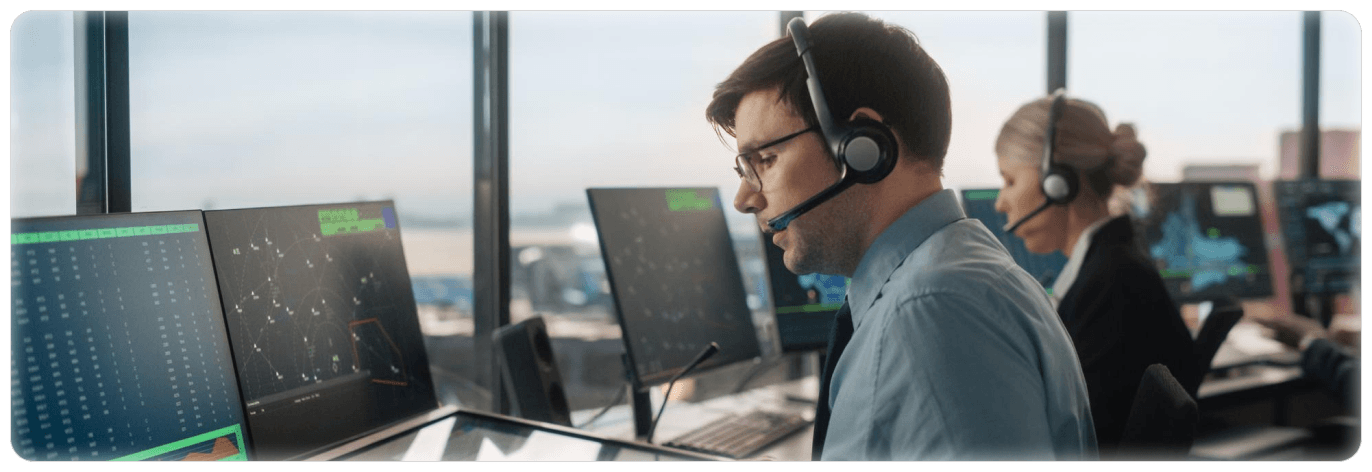
This blog explains why airports should stop adding software and start unifying around a single airport operating system built on clean architecture.
Spoiler: your Ops team, Finance team, IT team, and even your tenants will thank you.


Airports usually add new software reactively:
Each solution makes sense in isolation.
But over time?
Airports end up managing 8 to 17 disconnected systems, like a stack of mismatched Lego bricks all leaning in different directions.
Symptoms of “Too Much Software” Syndrome:
Adding more tools doesn't fix the underlying fragmentation.
It just adds… more fragmentation.
It feels counterintuitive.
More tools should mean more capability, right?
Not in airports.
The more software you add, the more:
Airports don't have a "tools" problem.
They have an architecture problem.
Most airport systems are built on monolithic, legacy architecture.
That means:
When you add more tools to this environment, you're not adding capability-you're adding complexity.
Imagine trying to expand a terminal by stacking more buildings on top of an old one without reinforcement.
Eventually… something cracks.
Airports need what hospitals, banks, airlines, and large enterprises already use:
A single operating system that connects every critical function.
Not a new module.
Not a new app.
Not a patched integration.
A platform-built on clean architecture-that unifies:
One OS.
One login.
One source of truth.
This is the evolution airports have been waiting for.
Airports love specifics, so here's what an operating system gives you:
A. Centralized Data (Finally)
Everything connects to a single shared database.
This means:
When data lives together, it behaves together.
B. Real-Time Sync Across All Departments
No delays.
No emails.
No “Hey can you export this again?”
C. Full Audit Trails
Every:
…is tracked, stored, time-stamped, and immutable.
Auditors adore this.
D. Automated Revenue Logic
The platform automatically calculates:
...everything updates in real time as activities happen.
Manual fixes are no longer the norm.
Billing issues no longer manifest out of the blue .
E. Scalable Infrastructure
With clean architecture powering your airport OS:
Legacy platforms can't handle the pressure.
Modern airport platforms scale right along with you.
F. API-First Aviation Integrations
Modern airport OS platforms support:
All connected natively.
G. Security That Matches Today’s Risk Landscape
Unlike legacy systems, an airport OS includes:
Planes need security.
Airport software does too.
Here's how each team benefits-and these are real outcomes seen across airports adopting a unified platform.
For Finance
Finance becomes strategic-not reactive.
For Operations
Operations shifts from reacting to problems to staying ahead of them.
For IT
IT stops being overwhelmed and starts having control.
For Compliance/Audit
Compliance is no longer chaotic; it becomes manageable.
For Airport Directors & Boards
Leadership gets clarity instead of constant questions.
Airports hold back on modernization for valid reasons:
Here's what's different now:
Modern airport platforms are built specifically to address these concerns-clean architecture means implementation typically happens in 60-120 days.
Airports are discovering that upgrading is actually easier than juggling 8-17 separate outdated systems.
Airports have outgrown the era of isolated tools.
The next decade belongs to airports that unify operations, revenue, compliance, and systems under a single, scalable operating system built on clean architecture.
The math is clear.
More tools = more chaos.
One OS = clarity, accuracy, and modern operations.
Airports deserve better than software from 1998.
They deserve a platform designed for 2025 - and beyond.


